
Glaucoma Surgery
When medication isn’t enough, surgery can save the eye — and sometimes the vision. A range of glaucoma surgery options exist for dogs and cats; the right procedure depends on your pet’s specific condition.

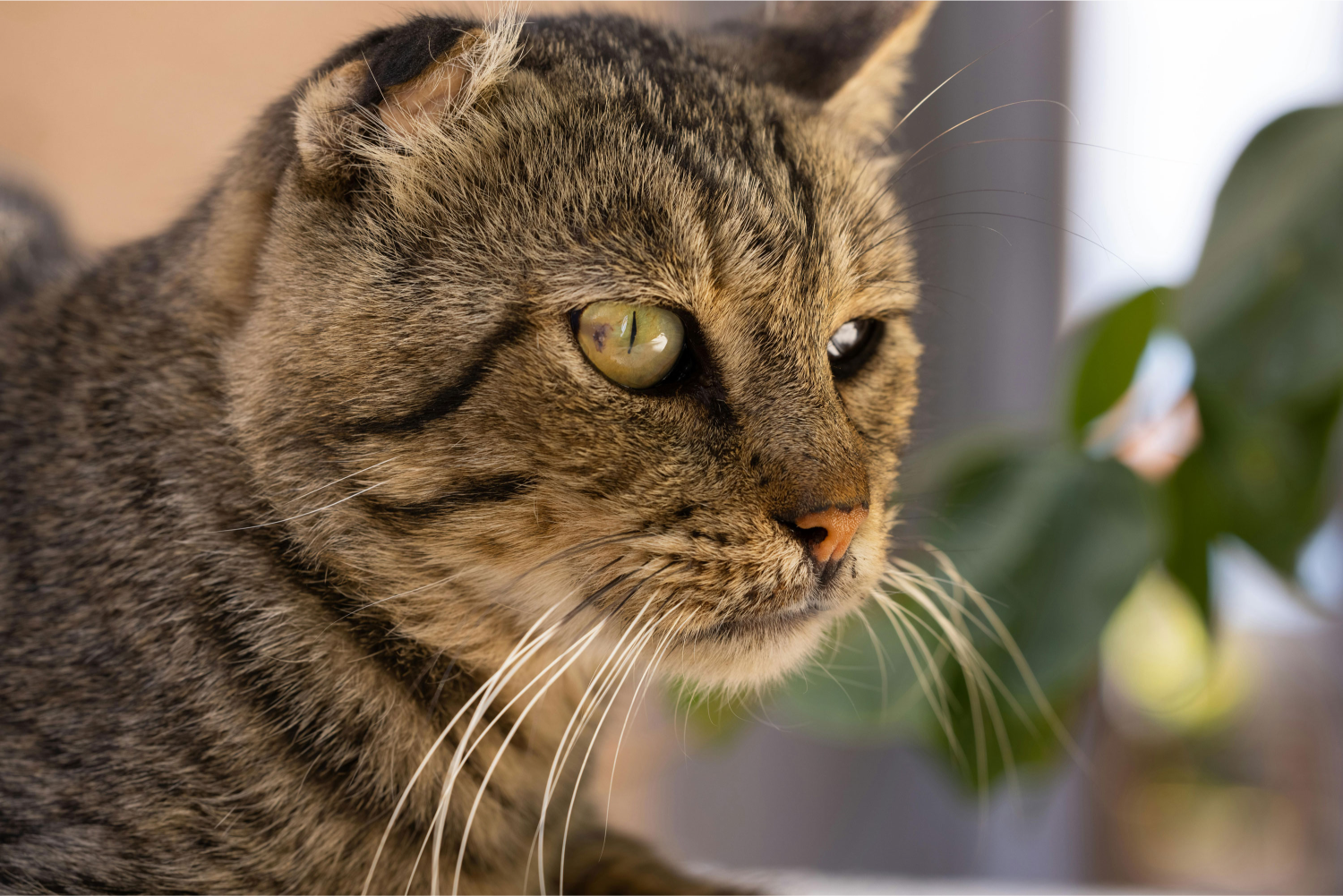
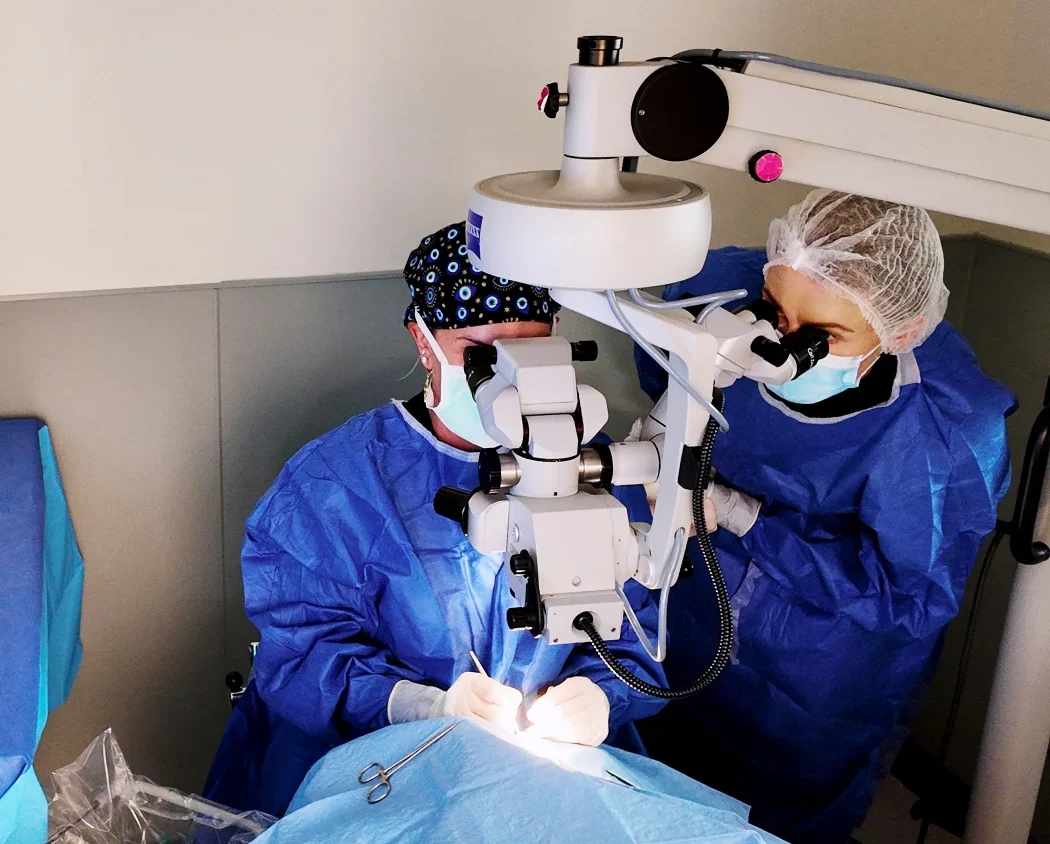
About Our Glaucoma Surgery for Dogs & Cats
Glaucoma is a serious, often painful condition caused by increased pressure within the eye. Surgical intervention may be recommended when medical management alone is not enough to control that pressure.
Procedures are designed to reduce discomfort, preserve remaining vision when possible, and protect long-term eye health. Treatment plans are tailored to each patient based on disease progression and overall condition.
What glaucoma surgery does
Glaucoma raises the pressure inside the eye and damages the optic nerve. When medication alone can’t keep pressure controlled, surgery is the next step. VVC offers a comprehensive range of options — from valve implants that preserve vision in early cases, to comfort-focused procedures for eyes that have already gone blind.
Is my pet a candidate for glaucoma surgery?
Visual eyes — preservation is our goal
The goal is to preserve what’s left. Surgical options focus on draining fluid out of the eye (Ahmed valve) or slowing fluid production (endolaser).
Blind eyes — comfort is our goal
The goal is comfort. A blind eye with uncontrolled pressure is painful. Options focus on either stopping fluid production inside the eye (ciliary body ablation) or removing the eye itself (enucleation or intrascleral prosthesis).
What to expect at your visit
-
Step 1: Check-in & Financial Deposit
Come to the front desk first to let us know you’re here. Please be sure your pet is safely restrained (dogs on leash, cats in carriers). You’ll review your estimate & leave the required deposit.
-
Step 2: Consent Forms & Questionnaire
A surgery nurse will then help you complete your surgical consent forms and paperwork by asking you a few, brief questions.
-
Step 3: Surgery Preparation & Procedure
Your pet will have an evaluation by our anesthesia veterinary technicians. Glaucoma surgery is generally performed early in the day. After surgery, you will be contacted by the doctor and a discharge time will be provided.
-
Step 4: Surgical Discharge
When you come to pick up your pet from surgery, come to the front desk to let us know you’re here. You’ll pay the remaining portion of the invoice and receive an itemized receipt. A discharge nurse will review your detailed post-operative instructions including monitoring, medications, and recheck schedule.
Your procedure options
Ahmed valve implant — visual eyes
A small drainage valve is implanted into the eye. Fluid drains through the valve into a reservoir placed under the eyelid, where the body absorbs it. Best for eyes with good visual potential and pressure that isn’t yet catastrophic. About 70% of valves are still controlling pressure at one year.
Endolaser cycloablation (ECPC) — visual eyes
VVC currently refers out ECPC patients. A laser tip is inserted through a small incision and used to treat the tissue that produces fluid (the ciliary body). Often combined with cataract surgery when both problems are present. Short-term control is strong; long-term control may require a second procedure.
Ciliary body ablation (CBA) — blind eyes
A good option for senior pets or pets that are poor anesthesia candidates, as this procedure is performed using light sedation. The success rate of CBA is approximately 90% with the initial injection – additional injections can be performed or the eye can be removed.
Enucleation — blind eyes
Surgical removal of the eye. The most reliable way to end pain — essentially 100%. Most pets recover within two weeks with no behavioral change whatsoever. This procedure allows for the eye to be submitted for biopsy – this allows us to determine the exact cause of your pet’s glaucoma which may impact their other eye or even their systemic health.
Intrascleral prosthesis — blind eyes
The contents of the eye are replaced with a silicone ball, preserving the cornea shell. Your pet keeps their “eye” appearance, but the eye is truly blind. Cosmetic results are excellent in about 95% of cases.
Frequently Asked Questions about Glaucoma Surgery for Dogs and Cats
When glaucoma stops responding to medication, the pressure rises, vision is lost, and the eye becomes painful — even with drops still on board. At that point, surgery is the next step. The right procedure depends on whether your dog still has vision in the affected eye and the underlying cause of the glaucoma.
In primary glaucoma, yes — it’s an inherited condition that affects both eyes. The second eye usually develops glaucoma about 8 months after the first without treatment, but preventative nightly eye drops can extend that to roughly 31 months. We start drops in the unaffected eye at the time of diagnosis. Other forms of glaucoma, such as secondary glaucoma, may not impact both eyes. Your doctor will discuss this in detail at the consultation.
Sudden corneal cloudiness, redness, vision loss, or squinting are red flags. If your dog has been prescribed Latanoprost 0.005%, give one drop every 5 minutes for 3 rounds and call us. If we’re closed, head to your family vet or an emergency hospital.
Once the pressure spikes acutely, the retina can be permanently damaged within hours — and an unrelieved spike can blind an eye overnight. That’s why a sudden cloudy, red, or squinting eye is treated as an emergency, not a watch-and-wait.
Yes, but the surgical landscape is narrower. In cats, glaucoma is usually secondary to chronic inflammation or cancer, and only a few medications reliably lower pressure. Enucleation is the recommended procedure for cats with glaucoma. Recovery is simple: 10–14 days of oral antibiotics, pain meds, and an E-collar.
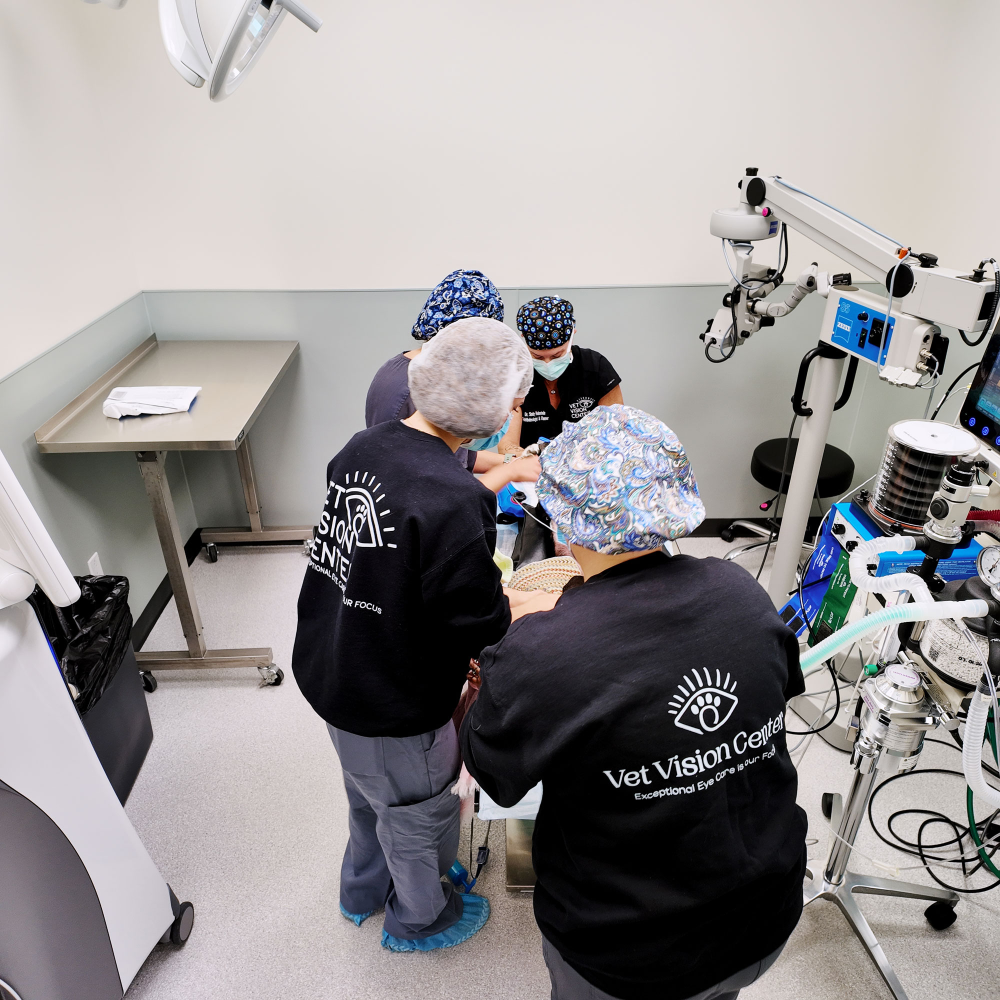
Related Resources: Your Guide to Surgery Day
While surgery and anesthesia naturally carry some risks, our highly trained team is equipped with advanced monitoring and protocols to actively mitigate them. We treat your pet’s safety as our highest priority, so you can rest assured they are in excellent, caring hands throughout the entire process.
From Dr. Shelby:
Alternative to eye removal
Ciliary body ablation is a compassionate, minimally invasive procedure for dogs suffering from untreatable, painful glaucoma. By permanently stopping excess fluid production, it relieves painful pressure while allowing your dog to keep their natural eye—providing a wonderful, gentle alternative to surgical removal.
The procedure involves an injection of medication into the vitreous chamber of the eye to permanently stop the cells that produce fluid. Because it is performed while your pet is sedated or under light anesthesia, it avoids the extensive trauma and recovery time of major surgery. It is especially beneficial for senior dogs or those with health conditions that make long, invasive surgeries risky.
The primary goal is long-lasting pain relief without the need for daily glaucoma medications – with the ciliary body ablation, pet owners often find great solace in knowing their dog is comfortable again.

Dr. Shelby Reinstein
Founder and board-certified veterinary ophthalmologist, Dr. Reinstein leads Vet Vision Center.
Let’s take care of your pet’s vision — together.
If something doesn’t feel right, you don’t have to wait. Schedule an appointment or give us a call. We’re here to help you find answers and next steps with clarity and care.