
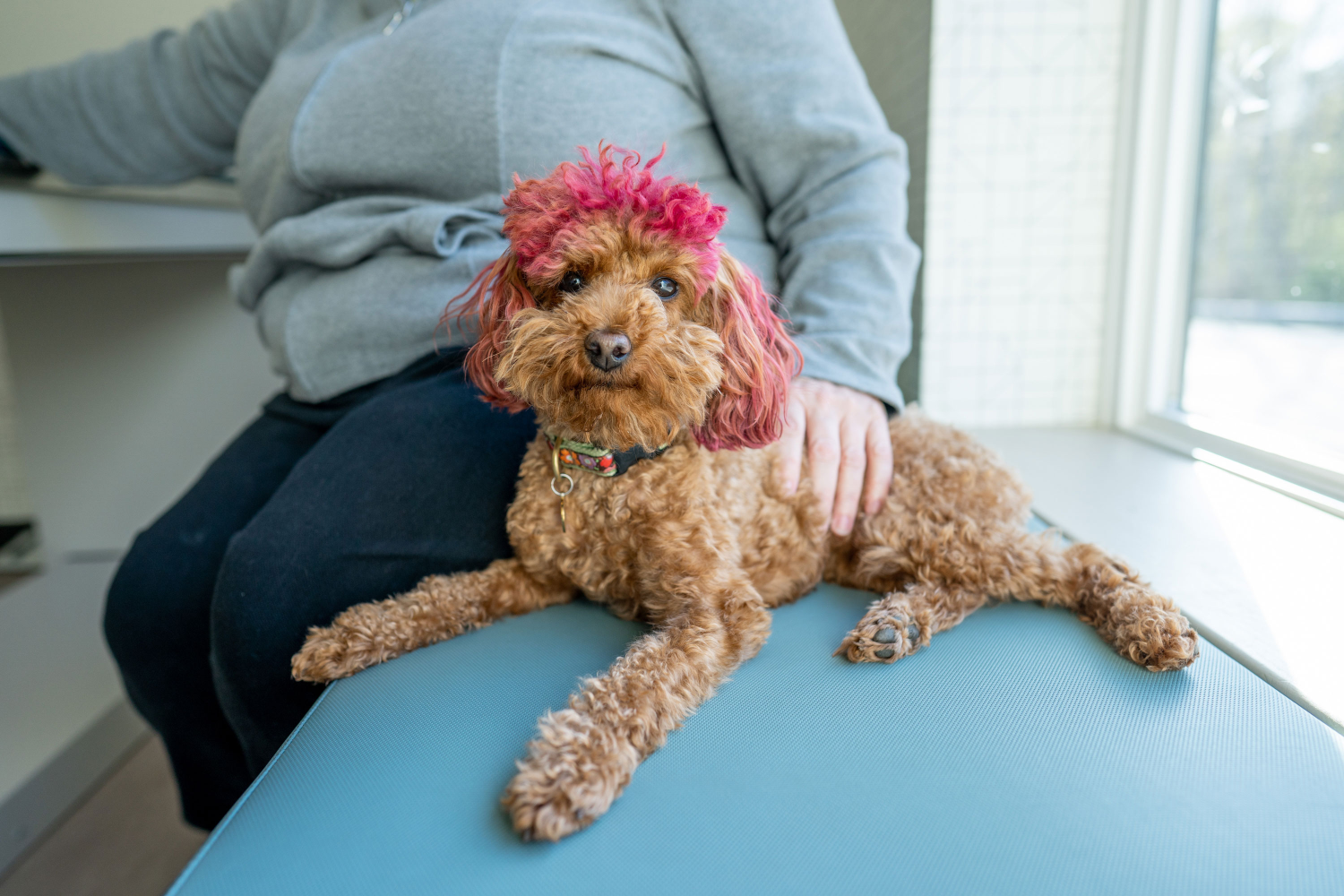

For Pet Owners
Ophthalmology Services
for Pet Owners
A specialty eye visit can feel intimidating, especially when your pet’s vision or comfort is on the line. Our team takes time to explain what we’re seeing, walk you through your options, and lay out what comes next, so you leave feeling confident, calm, and hopeful.
Specialty care, for pets and people.
Every patient is seen by highly-trained specialists using cutting-edge diagnostic tools. We work at your pet’s pace, not the clock’s, and send discharge notes back to your entire veterinary care team after every visit.
Request Appointment
Request a visit with our ophthalmology team — we’ll follow up to schedule a time that works for you.
Submit Patient History
Share your pet’s symptoms, medications, and prior eye care so we can prepare for your appointment.
Refill a Prescription
Request a refill from our pharmacy — we’ll fill the order and let you know when it’s ready.
Specialty Ophthalmology Services
for Dogs, Cats & Horses
Eye Exams
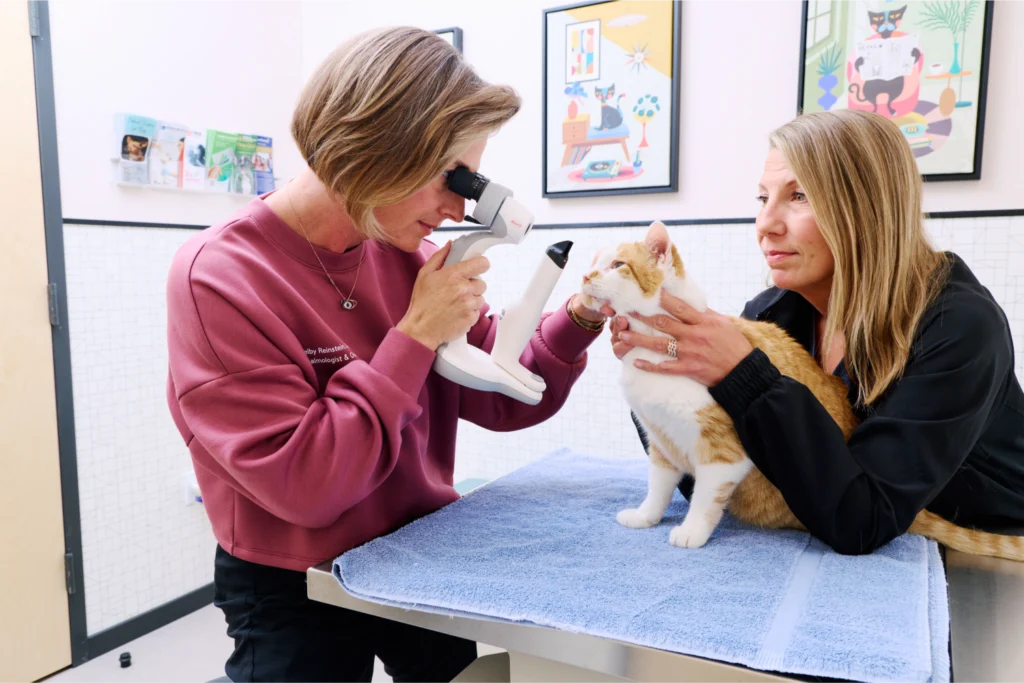
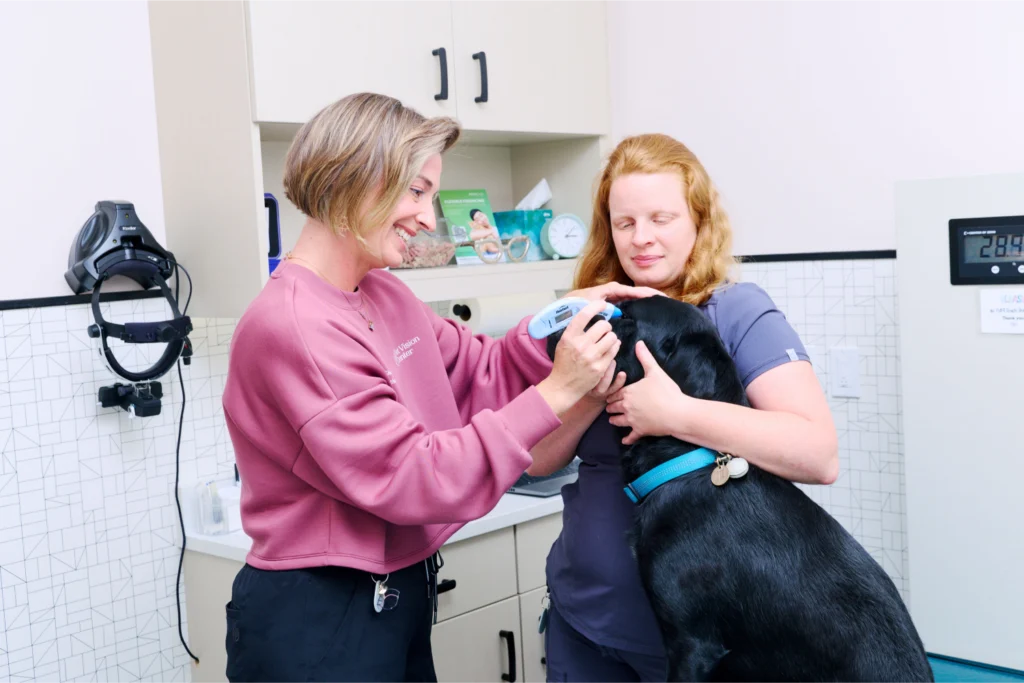
A comprehensive eye exam for dogs and cats is a painless, specialized assessment evaluating the health of the internal and external health of the eye.
Ophthalmic Surgery
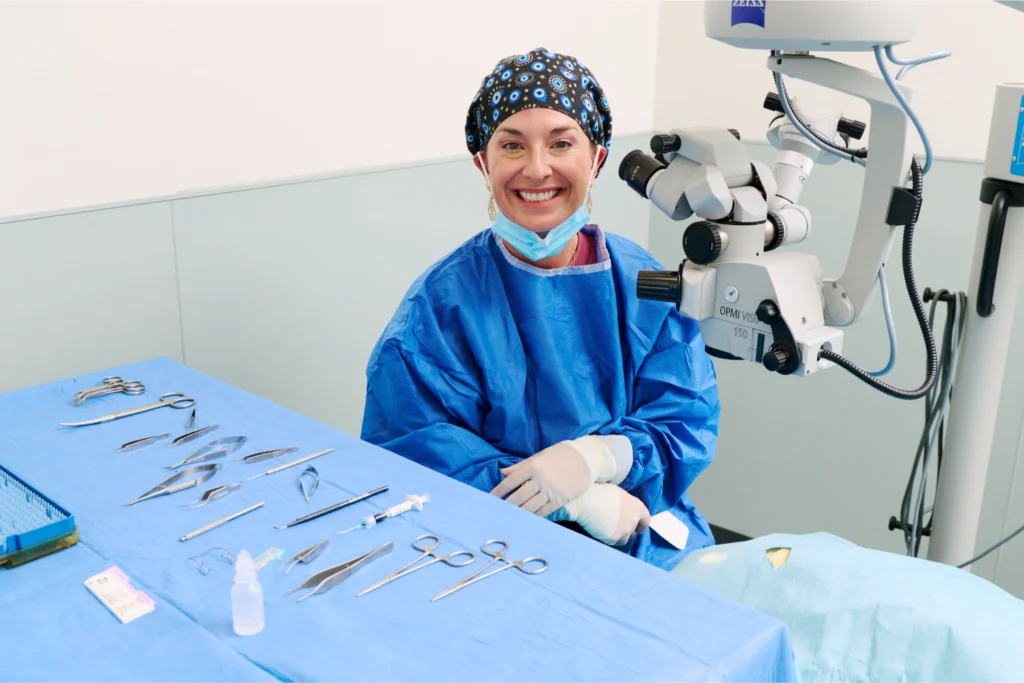
Veterinary ophthalmic surgery involves advanced, sensitive procedures on the eye(s) and surrounding structures of dogs and cats to treat diseases, relieve chronic pain, and restore or preserve vision.
Cataract Surgery
Cataract surgery for dogs is a safe, highly effective procedure that restores vision by removing the cloudy lens and replacing it with a clear, artificial intraocular lens.
Equine Ophthalmology
Equine ophthalmology focuses on the diagnosis, medical management, and surgical treatment of eye diseases, injuries, and vision-threatening conditions in horses.
Some of the services pet owners visit us for most often.
Frequently Asked Questions about Eye Care,
for Pet Owners
At Vet Vision Center, we understand that healing your pet’s eyes is only partly our job – as the pet owner, you are the primary caregiver and a crucial member of your pet’s medical team. We hope the resources below will help you achieve this, but please call us at the office or explore our Hospital Policies for additional guidance!
First Time Visits
Vet Vision Center is appointment-only. Submit the Appointment Request Form or call us at (609) 418-3937. Our team will follow up within one business day to confirm a time that works for your schedule.
No. You can book directly with us. Your primary vet needs to send records ahead of your visit, so we can review them in advance, and we’ll send a written summary back to your care team after every appointment.
While we’re not a 24/7 emergency hospital, we prioritize urgent cases and can often schedule appointments within a few days for pain, vision-threatening, or rapidly-progressing eye issues. Call (609) 418-3937 to describe what you’re seeing and we’ll help determine the right next step.
Vaccination records, prior eye records, and list of current medications should be sent over prior to your appointment. Photos of the eye can be sent any time after an appointment is made, including before the visit. If your pet has anxiety triggers, prefers a muzzle, or takes pre-visit calming medications, please mention that at check-in so we can make the visit as smooth as possible.
Plan for about 60 to 90 minutes for a new-client eye exam. Eye recheck appointments take less time; usually 45 to 60 minutes. Time includes check-in, history, the exam itself, and time to discuss findings. Pre-surgical consults run closer to 90 minutes because they include diagnostic testing.
We ask for at least 24 hours’ notice to cancel or reschedule. Appointments canceled with less than 24 hours’ notice, or no-shows, may be charged 50% of the exam fee. We understand emergencies happen and handle those individually.
Occasionally, yes. Vet Vision Center is built around small animal and equine ophthalmology, but we’ll consider exotic patients on a case-by-case basis depending on the species and the condition. Please call us at (609) 418-3937 before booking so we can confirm we’re the right fit for your pet.
We have an in-house lab and perform on-site bloodwork, blood pressure checks, and similar diagnostics. For abdominal ultrasounds and echocardiograms, we partner with Dr. Johanna Frank, a board-certified internist who provides those services on-site for your convenience. For other specialty needs like neurology, dermatology, dental, or cardiology, we maintain a list of trusted referral partners on the Our Doctors page.
Surgery & Post-Op
If your pet is scheduled for testing, a procedure, or surgery, we’ll assign you a drop-off time. Plan for about 30 minutes at admission — a member of our team will review the consent form, discuss your pet’s medications, and answer any questions. A deposit is required at drop-off, with the remaining balance due at discharge. We’ll arrange a specific discharge time with you once your pet’s procedure or testing is complete.
Your pet should have no food after 10:00 PM the night before surgery. Water should remain freely accessible.
Based on current anesthesia guidelines, we recommend that pets having a surgical procedure have pre-procedure medications to help with calming and to reduce nausea. We can either send these home with you at the time of the consultation, or you may contact us once the procedure is scheduled to fill the prescriptions.
If your pet is currently taking medications you will be instructed on which ones to give or not give prior to the procedure.
This varies depending on the amount of procedures scheduled that day, the order the procedures are preformed, and the procedure itself. Surgeries are performed between 9 AM – 3 PM and you will receive an update as soon as the surgery is complete and your pet is recovering. All procedures have same day discharge that typically take place between 1 PM – 5 PM.
We understand leaving your beloved pet to have a surgery preformed can be stressful and we are happy to answer any questions you may have about how your pet is doing while they are in our care.
Yes. We have a linked list of pet-friendly hotels and convenient restaurants in the Lambertville area for clients traveling in for surgery or extended visits. Ask at your scheduling call and we’ll send you our current recommendations, or visit our About page for links to local hotels.
No. Vet Vision Center does not provide overnight hospitalization. All patients are picked up by 5:30 PM on the day of their visit. Late pickup is charged at $100 per 15-minute interval after 5:30 PM to cover the cost of our team staying late to care for your pet.
Common signs of an eye problem include squinting or holding the eye partially closed, pawing or rubbing at the eye, discharge or excessive tearing, redness of the eye membranes, color changes to the eye surface (cloudy, red, or brown), haze or cloudiness within the eye, dilated pupils, or reduced vision. If you notice any of these, contact us so we can evaluate your pet promptly.
Payment Info
Cash, personal checks, all major credit cards (Visa, Mastercard, American Express, Discover), and CareCredit. Payment is due at the time of service. For procedures requiring admission, we collect a deposit at drop-off and the remaining balance at discharge.
Yes. We extend a 5% discount for seniors (65+ with valid ID), a 5% discount for active or retired military, police, and firefighters, and a 15% discount for non-profit rescues with a current 501(c)(3). Discounts apply to professional services only — not medications, labwork, or supplies — and cannot be applied retroactively. If you qualify, please let our team know at check-in.
Medication Tips
Submit the Prescription Refill Form, call (609) 418-3937, or email pharmacy@vetvisioncenter.vet. Allow at least one business day to process. By law, we can only refill medications for pets seen at VVC within the past year. For medications dispensed by a compounding pharmacy like Stokes or Wedgewood, please contact them directly.
For drops: position your pet facing away from you, with their back against your stomach or legs so they can’t back away. With your non-dominant hand, gently grasp their chin and tilt it upward so the eye is parallel to the ground. With your dominant hand, hold the dropper bottle and use two fingers to gently open the eye. Squeeze the bottle so one drop lands on the surface of the eye, between the upper and lower eyelids, not on the eyelid fur. If you aren’t sure the drop landed, give another one. Avoid touching the tip of the bottle to your hand, your pet’s fur, or anything else.
For ointments: apply to the underside of your pet’s upper eyelid, then gently close and open the eye a few times to help the ointment spread evenly across the surface.
Praise your pet warmly afterward and offer a favorite treat as a reward.
Give medications outside your pet’s comfort zone, like on a table or countertop rather than on the floor or couch. Spend time gently touching their head and around their eyes before each dose to desensitize them. If possible, have another person pet their body during application as a distraction. Wrapping your pet in a towel with their head exposed can help with restraint. If your pet is biting, invest in a soft fabric muzzle. We prefer those over the cage-style.
A few key reminders:
- Do not bribe with a treat beforehand. Only reward after they have accepted the medication.
- Do not yell your pet’s name or say “no” when they resist. Some pets read this as affirmation. Stay calm and quiet.
- Do offer plenty of praise and treats once they settle.

Related Resources: Medication Schedule Checklist
Giving medications as prescribed is an important part of your dog’s treatment and recovery. Keeping track of doses, schedules, and special instructions can help ensure medications are administered safely and effectively. This checklist is designed to help you organize your dog’s medications and monitor their treatment plan.
Let’s take care of your pet’s vision — together.
If something doesn’t feel right, you don’t have to wait. Schedule an appointment or give us a call. We’re here to help you find answers and next steps with clarity and care.