
Cataract Surgery
A highly specialized procedure to restore vision in pets affected by cataracts.

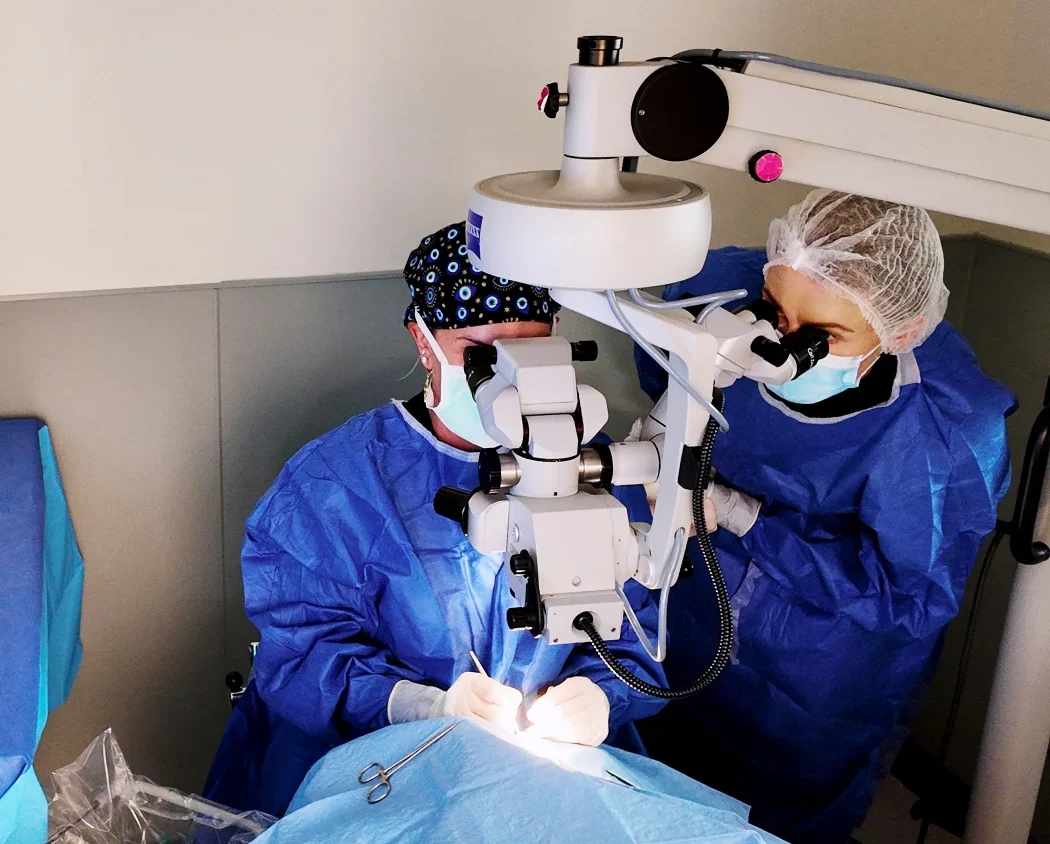
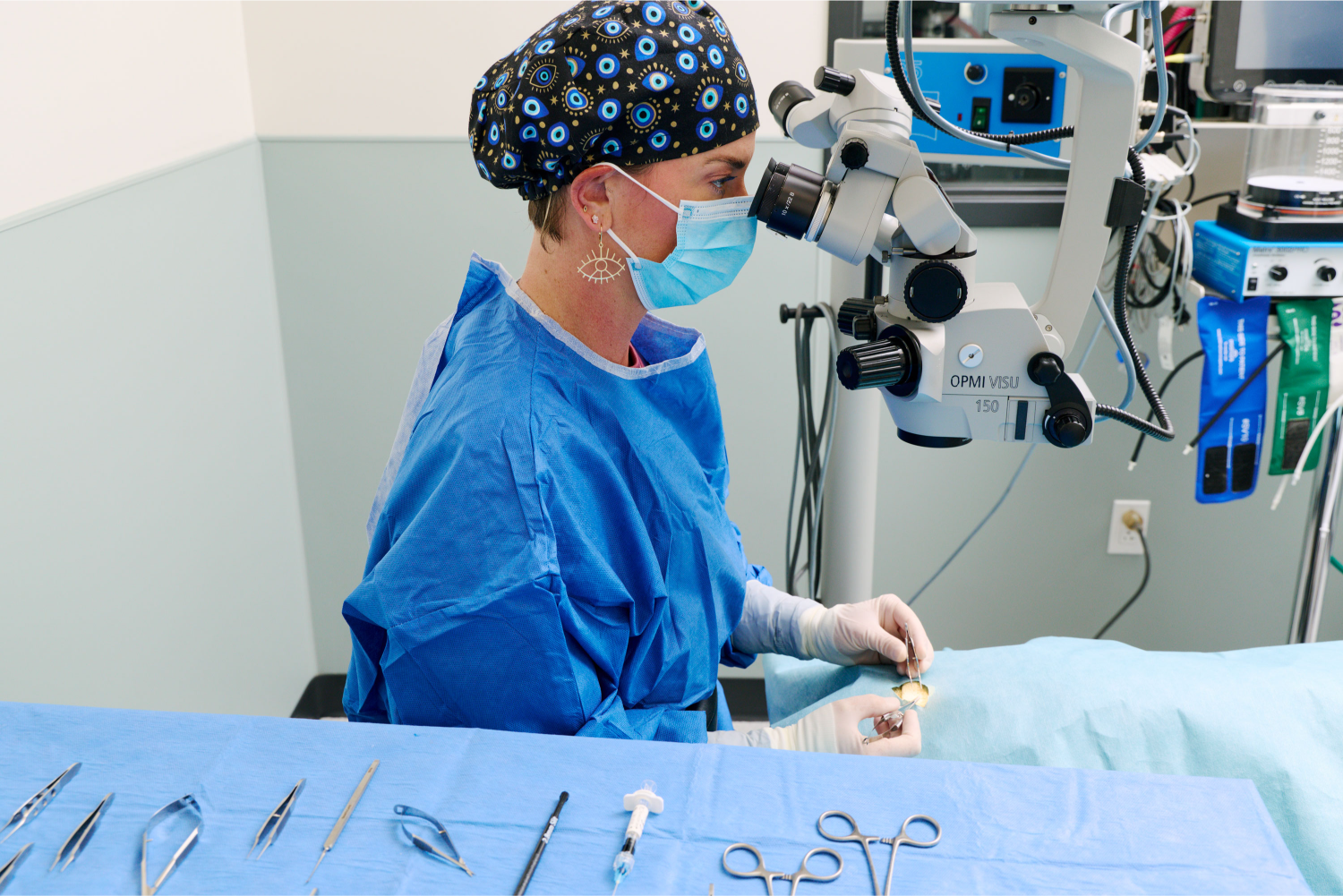
About Our Cataract Surgery for Dogs & Cats
Cataract surgery involves removing the clouded lens and replacing it with an artificial lens, allowing light to properly reach the retina again. It is one of the most effective ways to restore vision in otherwise healthy eyes.
This procedure is recommended for pets whose vision has been significantly impacted by cataracts and who are good candidates based on a full ophthalmic evaluation.
Pre-Surgical Evaluation
If the initial eye exam indicates that your pet is a possible candidate for cataract surgery, additional testing will be scheduled. We’ll schedule a pre-surgical evaluation visit which includes both the testing of your pet’s eyes and evaluation of your pet’s systemic health prior to anesthesia. Most often these tests are performed without sedation and are performed in a few hours. We’ll provide you with pre-surgical instructions and any necessary pre-surgical medications.
Post-Surgical Expectations
After cataract surgery, your pet will be treated with numerous, frequent eye medications to ensure proper healing and reduce the risk of complications. Oral medications and an E-collar are also essential parts of the post-operative plan. Medications are adjusted over time based upon your pet’s exam findings. Recheck examinations are frequent in the initial post-operative phase, but long term are often only twice a year for a microscopic exam and intraocular pressure measurement.
What to expect at your visit
-
Step 1: Check-in & Financial Deposit
Come to the front desk first to let us know you’re here. Please be sure your pet is safely restrained (dogs on leash, cats in carriers). You’ll review your estimate & leave the required deposit.
-
Step 2: Consent Forms & Questionnaire
A surgery nurse will then help you complete your surgical consent forms and paperwork by asking you a few, brief questions.
-
Step 3: Surgery Preparation & Procedure
Your pet will have an evaluation by our anesthesia veterinary technicians. Cataract surgery is generally performed early in the day. After surgery, you will be contacted by the doctor and a discharge time will be provided.
-
Step 4: Surgical Discharge
When you come to pick up your pet from surgery, come to the front desk to let us know you’re here. You’ll pay the remaining portion of the invoice and receive an itemized receipt. A discharge nurse will review your detailed post-operative instructions including monitoring, medications, and recheck schedule.
Frequently Asked Questions about Cataract Surgery for Dogs and Cats
Cataract surgery in dogs and cats is performed much like it is in people, with the main difference being that animals must be placed under general anesthesia for the surgery. An operating microscope is used to magnify your pet’s eye for surgery. A small incision is made at the top of the cornea and a microscopic probe is used to dissolve and remove the cloudy cataract material from within its lens shell. An artificial intraocular lens (IOL) is placed within the lens shell in most cases. Microscopic suture is used to close the incision, and your pet is recovered from anesthesia.
The success rate of cataract surgery is high – over 90% of patients undergoing surgery have their vision restored! Your pet’s specific situation may carry additional risks that could affect the outcome, and would be discussed with you before surgery.
Complications after surgery are possible, with most being minor and treatable. Ulcers around the corneal incision and inflammation inside of the eye may occur after surgery but usually resolve with medications. In a small percentage of pets, serious complications may develop after surgery such as glaucoma, retinal detachment, or infection in the eye. Vision is often affected by these conditions, and affected pets may require added medications, additional procedures, or rarely, eye removal.
If the initial eye exam indicates that your pet may need cataract surgery, additional testing will be scheduled to determine whether they are a candidate for the surgery. The back chamber of the eye must be tested to ensure it is healthy, since cataracts block this area from view during the initial eye exam. Most often, two tests are necessary — an electrical test of the retina called an ERG, and an eye ultrasound to obtain images of cataract and retina.
Your pet’s systemic health must also be assessed to ensure they can safely undergo anesthesia. A physical examination and routine bloodwork are required – these may be performed at the VVC during your testing day, or by your primary veterinarian with results reported to us at least 1 week before surgery. Additional tests may be necessary based upon your pet’s underlying health status.
For the first two weeks after surgery your pet will need to be treated with eye drops and oral medications. After that, eye drops are gradually reduced based upon your pet’s recheck exam findings. Generally the long-term medical treatment plan is achieved by 2-3 months post-operatively.
A rigid E-collar is absolutely required at all times after surgery for the first 1-2 weeks. Your pet must not be allowed to rub at the eyes as they could disrupt the sutures, cause corneal ulcers, or damage the inside of the eye.
Long term, most pets are treated with an eye drop to minimize chronic post-surgical inflammation. Preventing such inflammation will decrease the chances of future complications like glaucoma and retinal detachment.
A typical post-operative recheck schedule is:
- 1 day post-op (complimentary)
- 1 week post-op (complimentary)
- 3 weeks post-op (complimentary)
- 6 weeks post-op
- 4 months post-op
- 8 months post-op
- Annually
Post-operative recheck exams beyond the first 3 complimentary exams are associated with standard exam and testing charges. Additional visits or medications may be necessary based upon your pets recovery from surgery.
The quote that you’ve been provided for cataract surgery includes the following:
- Pre-anesthetic examination, custom anesthesia plan
- IV catheter, sedative & pain medication injections
- General anesthesia with gas inhalant
- Anesthetic monitoring (heart rate, oxygen levels, blood pressure)
- Operating Room & Operating Microscope usage
- Cataract surgery equipment, instruments & supplies
- Phacoemulsification (surgical procedure to remove the cataract)
- Intraocular lens (IOL) implant
- Post-operative recovery & monitoring
- Initial stock of post-operative eye drops and pills
- Rigid E-collar
- The 1 day, 1 week, and 3 week post-op recheck exams
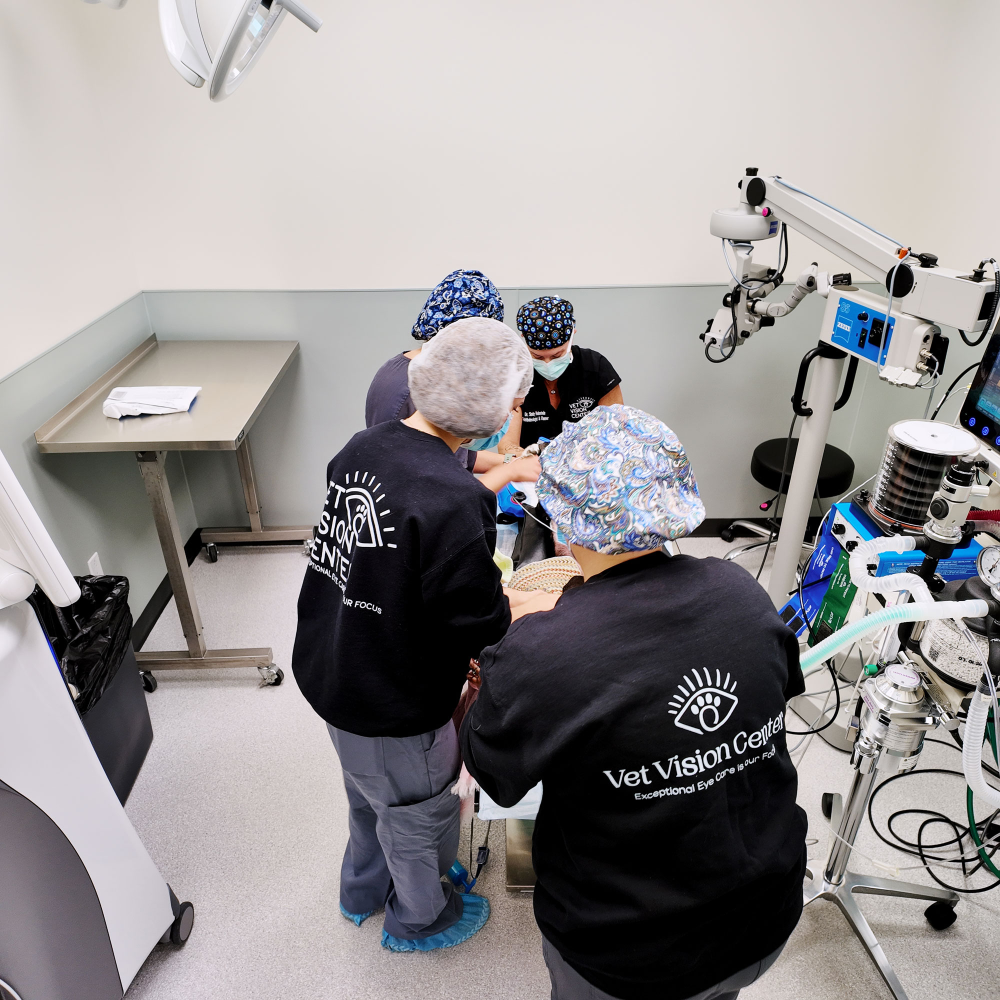
Related Resources: Your Guide to Surgery Day
While surgery and anesthesia naturally carry some risks, our highly trained team is equipped with advanced monitoring and protocols to actively mitigate them. We treat your pet’s safety as our highest priority, so you can rest assured they are in excellent, caring hands throughout the entire process.
Let’s take care of your pet’s vision — together.
If something doesn’t feel right, you don’t have to wait. Schedule an appointment or give us a call. We’re here to help you find answers and next steps with clarity and care.