
Eye Exams & Tests
A comprehensive eye exam to evaluate your pet’s vision, diagnose concerns, and determine next steps for care.

About Our Eye Exams & Tests for Dogs & Cats
Eye exams at Vet Vision Center are thorough, specialty evaluations performed by our specialty-trained doctors. These visits go beyond routine checks, using advanced tools and techniques to assess the full health of your pet’s eyes.
What the eye examination is
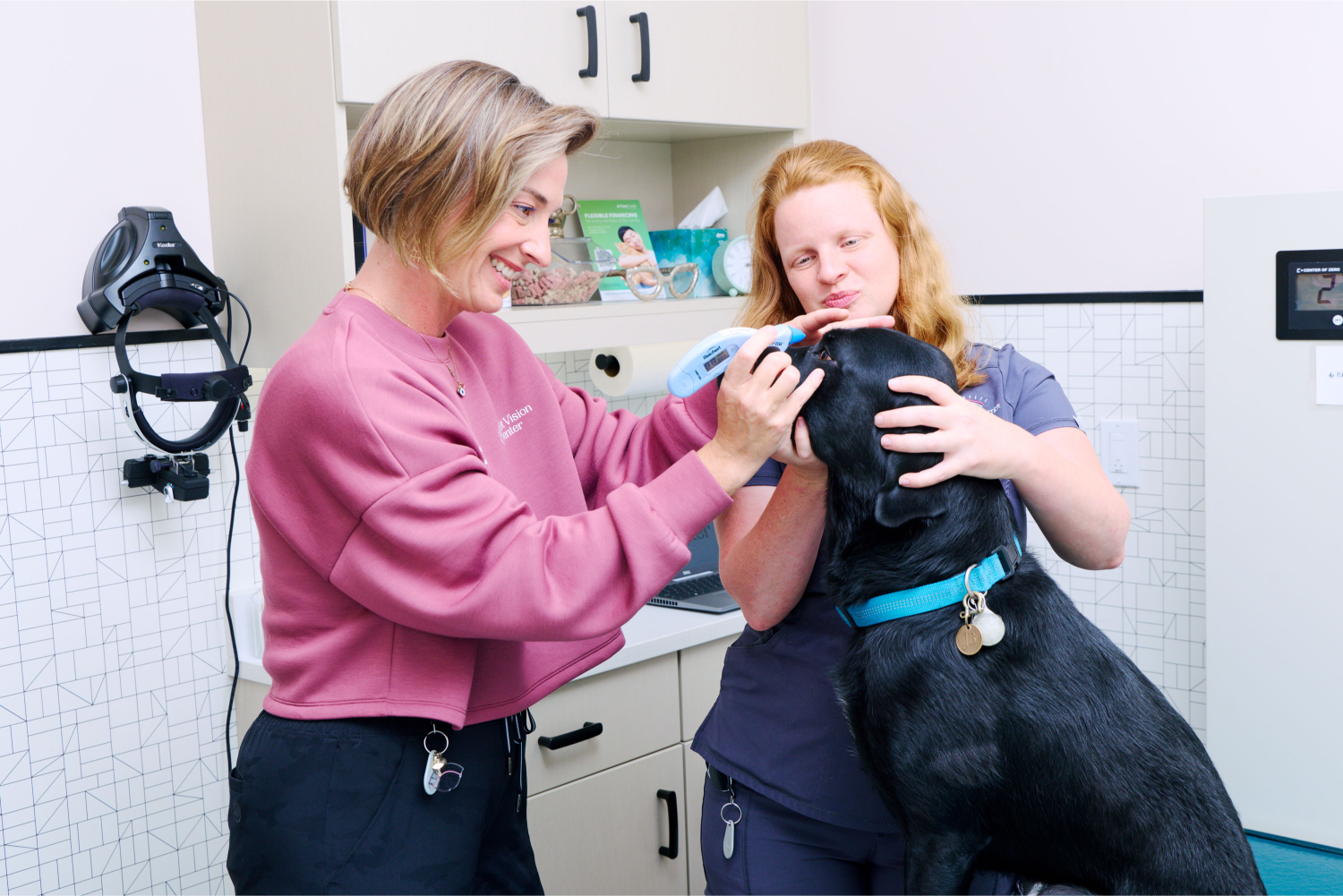
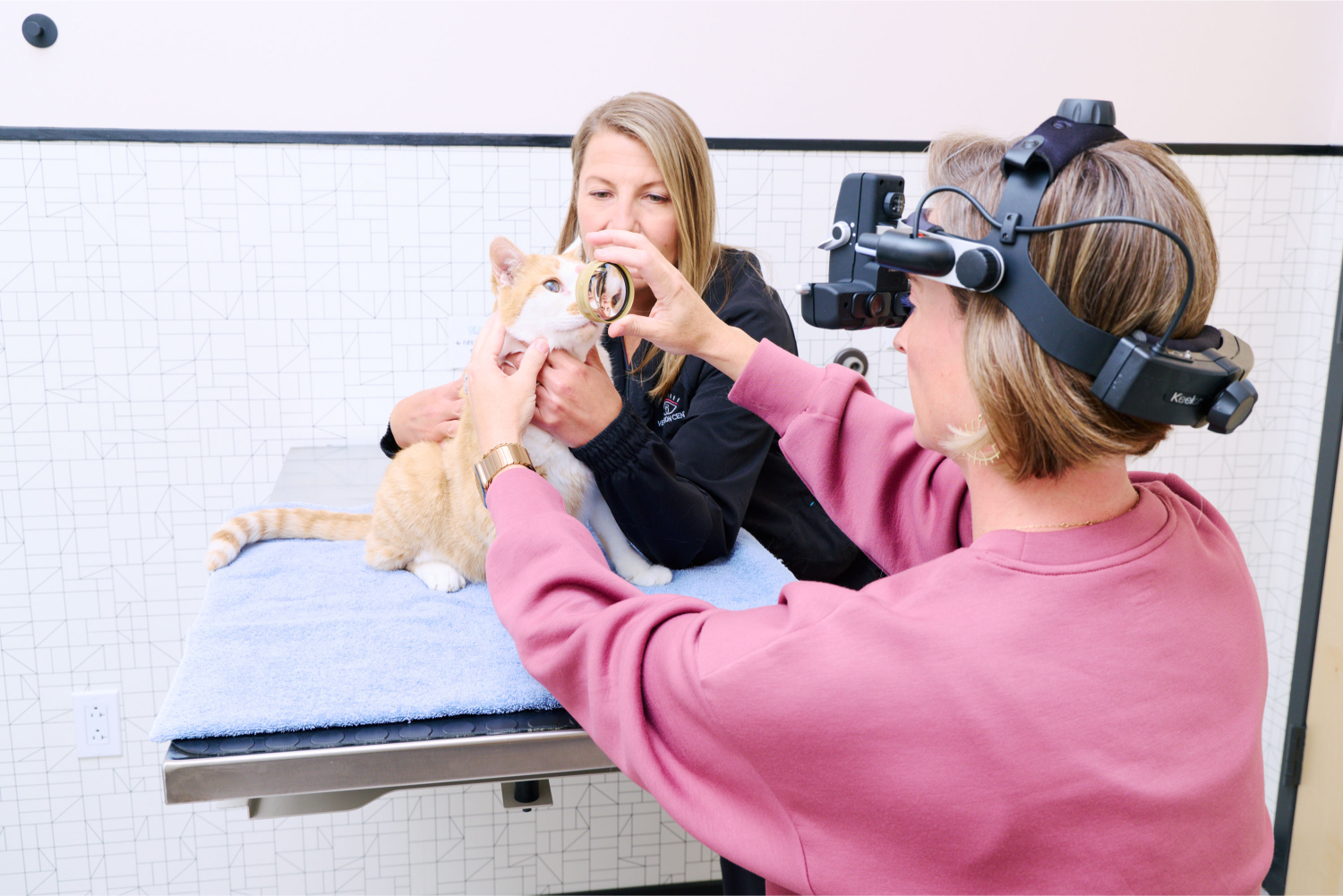
A comprehensive eye examination includes evaluation of your pet’s vision, neurologic ocular reflexes, and a microscopic evaluation of the tissues around the eye and within the eye itself. Special equipment is used to examine your pet’s retina. A new patient consultation also includes the basic ocular testing for dry eye, corneal ulcer fluorescein staining, and measurement of the intraocular pressure. The doctor will discuss the findings of the exam and complete disease information with those present at the consult.
Who should get one
- Pets experiencing symptoms of an eye problem, such as:
- Eye or membrane redness
- Tearing or discharge
- Squinting or rubbing at the eye
- Cloudiness or eye color change
- Changes in vision
- Referrals requiring a detailed ophthalmic work up
- Any pet owner who wants to ensure their pet’s eyes are as healthy as possible
What to expect at your visit
Here's how to prepare for your examination consultation visit, whether you're a new patient or a frequent flier. Please plan to arrive 15 minutes before your appointment time.
-
Step 1: Arrive & Check In
Come to the front desk first to let us know you’re here. Please be sure your pet is safely restrained (dogs on leash, cats in carriers). You’ll complete your check-in paperwork and verify your account information.
-
Step 2: Meet Your Exam Nurse
Our outpatient nurse will obtain a medical history from you, verify your pet’s medications, and then will discuss this information with your doctor. Please be sure to share with us if your pet needs a muzzle or other accommodations for a safe exam experience.
-
Step 3: Exam & Testing
The doctor and nurse will safely position your pet for the exam and testing. The new patient consultation includes a Schirmer Tear test, fluorescein staining, and tonometry (measurement of the intraocular pressure). The microscopic exam is performed in a darkened room and we may dilate your pet’s pupils.
-
Step 4: Consultation & Medications
Our doctors will discuss the findings of the consultation and provide detailed information on your pet’s condition, the plan for treatment, and the important considerations for the future. You and your pet’s entire health care team will receive a complete visit summary which includes the exam findings, test results, and medication information.
The tools
Slit-lamp biomicroscopy
Slit lamp biomicroscopy is a painless part of the eye exam where our doctors use a specialized, highly magnified light source to closely inspect the front of your pet’s eyes. It is completely non-invasive and provides a detailed, 3-D view to diagnose conditions such as corneal ulcers and cataracts.
Tonometry (TonoVet or TonoPen)
Tonometry measures the pressure inside the eye. This is accomplished with a quick tap on the corneal surface — most pets barely notice. This test is essential for diagnosing and monitoring glaucoma and after certain surgeries like cataract surgery.
Indirect ophthalmoscopy
Indirect ophthalmoscopy is a safe, non-invasive part of the eye exam where our doctors use a specialized headset and magnifying lens to look deep inside your pet’s eye at the vitreous and retina. This panoramic view allows them to clearly evaluate the retina, optic nerve, and blood vessels to detect issues like retinal detachments, optic nerve disease, or retinal atrophy.
Frequently Asked Questions about Eye Exams & Tests for Dogs and Cats
A veterinary ophthalmologist is a specialist in medical and surgical diseases of animals eyes. To become a veterinary ophthalmologist, you must first graduate from veterinary school, attain a minimum of 12 months full-time clinical practice as a veterinarian, and complete a 3-year or longer residency training program in veterinary ophthalmology. The certifying board examination is a rigorous, multi-day process consisting of multiple written and practical components. After achieving all of these criteria, a veterinarian is recognized as a “Diplomate of the American College of Veterinary Ophthalmologists, DACVO®.
At Vet Vision Center, no — you can book directly. We do require your primary vet to send your pet’s records before the visit so we can review them in advance, and we send a written summary back after every appointment to keep your full care team in the loop. Vets can also choose to submit a referral through the form on our website, which we encourage, especially if they feel the case is urgent.
Plan for about 45–60 minutes. That includes check-in, history, pupil dilation (15–20 minutes to take effect), the exam itself, and time to walk through findings with the doctor. If your pet is a surgical candidate, we’ll often schedule pre-surgical testing as a separate visit.
Almost never for a routine exam. The full ophthalmic workup, which includes slit-lamp microscopy, tonometry, and indirect ophthalmoscopy, is well-tolerated awake. Light sedation is reserved for fractious patients or for advanced imaging that requires absolute stillness. If your pet is aggressive or won’t allow an exam without sedation, please call us ahead of time so we can discuss the best approach for their visit.
A Schirmer tear test is a 60-second screen for dry eye. A small paper strip is tucked under the lower eyelid and the wetness measured. It’s used whenever we suspect dry eye disease — chronic redness, mucus discharge, recurrent ulcers — and routinely at senior eye exams, since dry eye is often silent until late.
Fluorescein is a harmless orange dye applied to the eye that glows green under blue light, highlighting any scratch, ulcer, or defect on the corneal surface. It’s a quick, painless test we use any time we suspect a corneal injury or ulcer, and to check whether the tear ducts are draining properly.
Tonometry measures the pressure inside the eye using a gentle, quick touch to the corneal surface. It’s how we screen for glaucoma, which raises eye pressure and can threaten vision, and for uveitis, which can lower it. It’s well-tolerated awake and is a routine part of a complete eye exam.
From Dr. Shelby:
About Eye Exams
Because this is what we do all day, every day, we are able to use specialized equipment to find subtle changes and offer advanced treatment options. Eye disease can move quickly – the sooner we can identify the problem and start the right treatment, the better chance we have to preserve comfort, vision, and quality of life. Our focus is narrow by design. We live in the details of ophthalmology — cataracts, glaucoma, corneal ulcers, dry eye, eyelid disease, retinal disease – this is our daily life. Vet Vision Center is different because ophthalmology is not one department among many — it’s our entire focus.
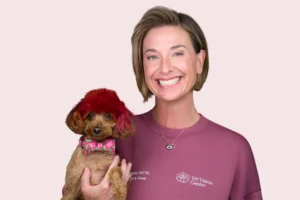
Dr. Shelby Reinstein
Founder and board-certified veterinary ophthalmologist, Dr. Reinstein leads Vet Vision Center.
Let’s take care of your pet’s vision — together.
If something doesn’t feel right, you don’t have to wait. Schedule an appointment or give us a call. We’re here to help you find answers and next steps with clarity and care.