
Advanced Diagnostics
The tools we use to see what’s really going on. Every diagnosis we make starts with the right equipment. Here’s what ours do, and why they matter.

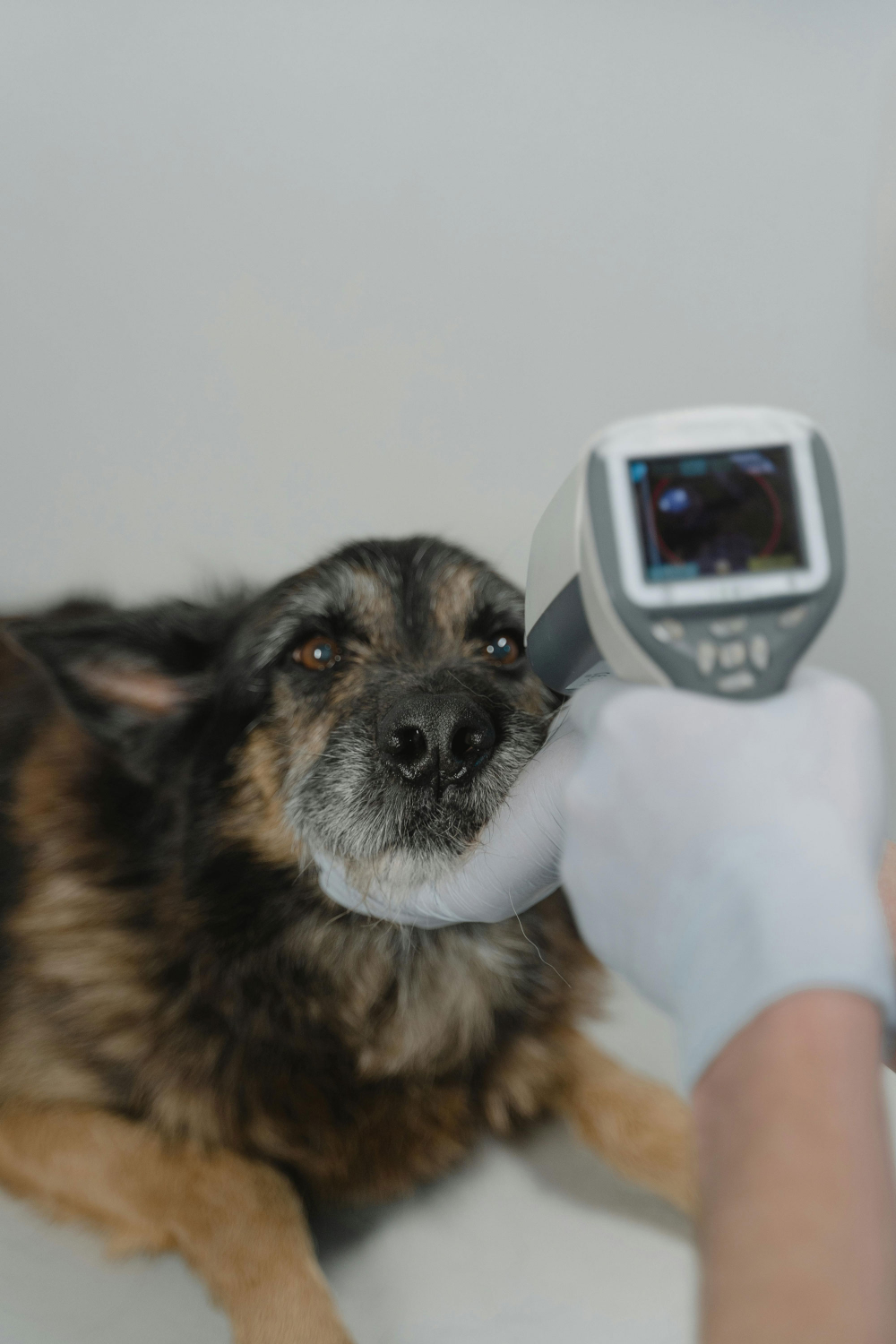
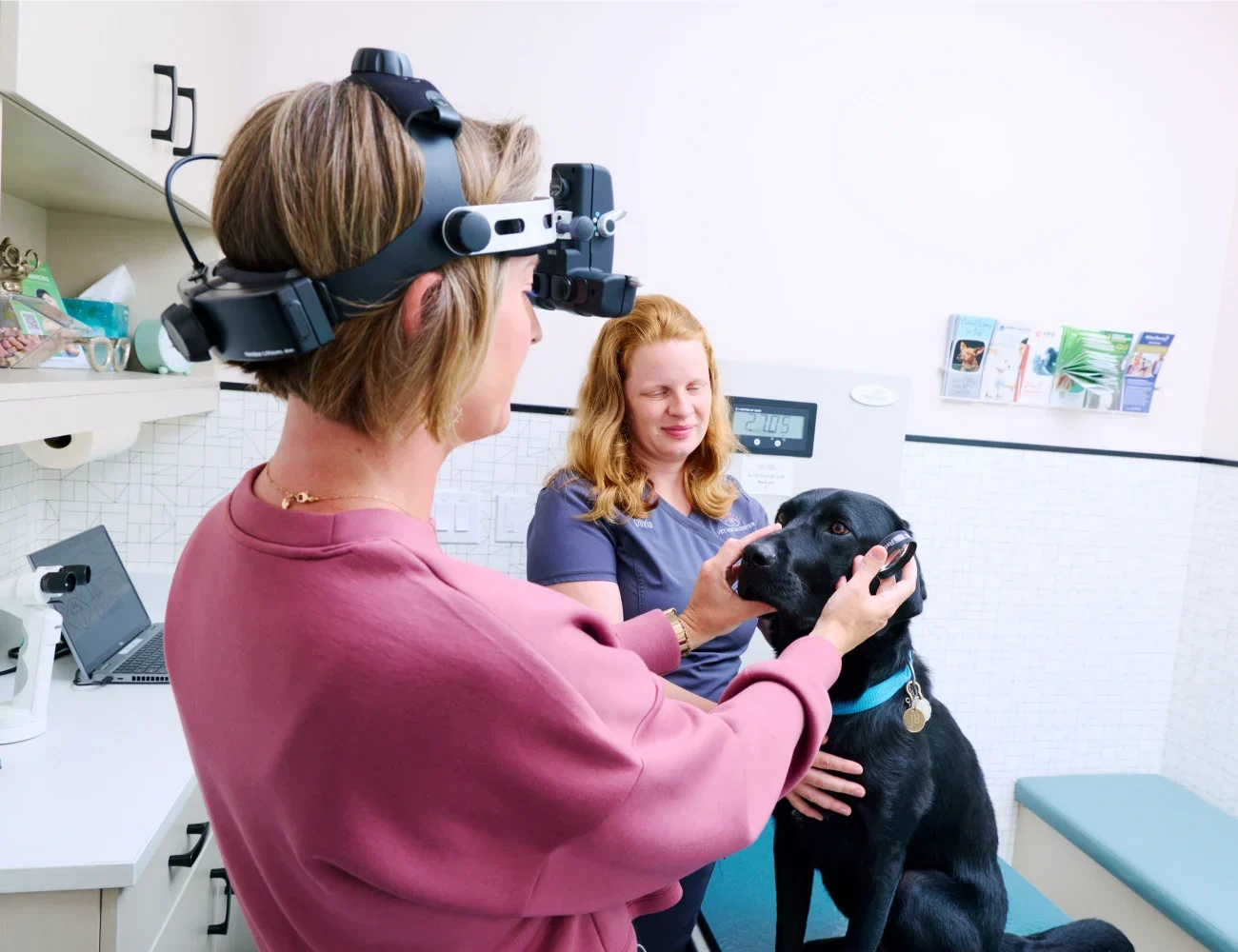
About Our Advanced Diagnostics for Dogs & Cats
VVC’s advanced diagnostic suite includes tests that go well beyond a standard eye exam — electroretinography for retinal electrical function, ocular ultrasound, Red/Blue pupillary light response, advanced anterior segment digital photography and digital retinal imaging.
These diagnostics are used to confirm or rule out specific conditions like SARDS, hypertensive retinal disease, occult glaucoma, and intraocular tumors when a routine exam isn’t conclusive.
Who needs advanced testing
If the routine eye examination doesn’t tell us the complete picture, we may recommend advanced ophthalmic diagnostics. Sometimes these tests can be performed during the same visit, but other tests may require that your pet come back on a separate day.
Say (squeeze) cheese!
At Vet Vision Center, we are redefining pet eye care through advanced digital ophthalmology imaging. During the exam we capture high-definition, crystal-clear images of your pet’s eyes using anterior segment photography and digital retinal imaging. This allows us to deliver precise, rapid diagnoses and exceptional care while elevating clinical precision. Combined with our fully electronic medical record system, we are transforming the standard of veterinary ophthalmology.
What to expect at your visit
-
Step 1: Schedule the testing
If advanced diagnostic testing is recommended for your pet, any CSR team member can help you schedule the testing.
-
Step 2: Preparing for the testing
Most advanced diagnostic tests can be performed awake, however some pets will require light sedation. Please review your paperwork and follow the instructions closely to properly prepare your pet for testing.
-
Step 3: The testing process
Usually the tests are completed within a few hours. Our doctors will review the test results and formulate recommendations.
-
Step 4: Test results
Our doctors will discuss the results of the tests and what these results mean for your pet. You will receive a copy of the results and recommendations.
The tools
Ocular ultrasound (B-scan)
When the view is blocked — by a dense cataract, blood in the eye, or corneal opacity — ultrasound tells us what’s behind it. Particularly important before cataract surgery to confirm a healthy retina.
Electroretinogram (ERG)
An ERG measures the retina’s electrical response to light, similarly to the way an EKG measures the heart’s electrical activity. An ERG is the only way to confirm the retina is working when it cannot be examined directly or when a pet is blind. This test is required before every cataract surgery but is also commonly used to diagnose other retinal conditions such as sudden acquired retinal degeneration syndrome (SARDS) and progressive retinal atrophy (PRA).
Chromatic Pupillometry (Red/Blue Pupillometry)
Chromatic pupillometry is a specialized, non-invasive eye test used to evaluate how a dog’s pupils react to different wavelengths of light. By flashing specific wavelengths of colored light using a medical device, we can selectively stimulate different parts of the retina to help diagnose underlying vision disorders like SARDS, or optic nerve diseases.
Frequently Asked Questions about Advanced Diagnostics for Dogs and Cats
An electroretinogram (ERG) measures the retina’s electrical response to light. It’s the only way to confirm the retina is functional when the lens is too cloudy to see through. ERG is required before every cataract surgery — there’s no point removing the cataract if the retina behind it has already failed.
Ocular ultrasound shows what’s inside the eye when the view is blocked — by a dense cataract, blood, or corneal opacity. It can identify retinal detachments, masses inside the eye, and lens displacement. Standard before cataract surgery and in any sudden-vision-loss workup.
Most advanced diagnostics are performed awake. Slit lamp, tonometry, ophthalmoscopy, ultrasound, and ERG are well-tolerated in cooperative patients. Light sedation is used selectively — for fractious patients, painful eyes, or imaging that requires absolute stillness.
Yes — automatically. After every appointment we send your primary-care vet a complete summary that includes the exam, diagnostic results, working diagnosis, and treatment plan. You also leave with a copy. If results come back later (biopsy, lab work), we contact you and your vet directly.
From Dr. Shelby:
About Advanced Diagnostics
During my year-long retinal disease fellowship at Penn Vet, I specialized heavily in ERGs — which are essentially EKGs for the eyes. This advanced testing lets us peek past the surface and measure the exact electrical health of your pet’s retina. It gives us a definitive answer on their vision potential, ensuring we make the safest, most precise treatment decisions possible.

Dr. Shelby Reinstein
Founder and board-certified veterinary ophthalmologist, Dr. Reinstein leads Vet Vision Center.
Let’s take care of your pet’s vision — together.
If something doesn’t feel right, you don’t have to wait. Schedule an appointment or give us a call. We’re here to help you find answers and next steps with clarity and care.